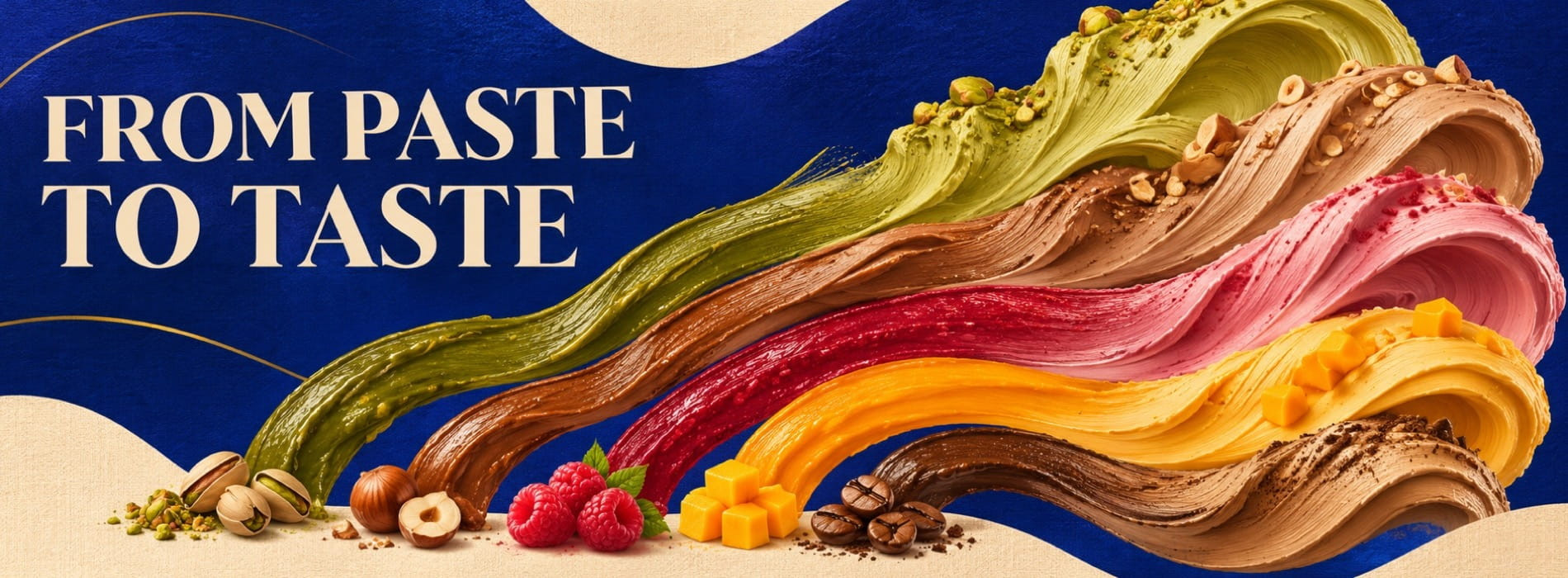
Gelato pastes are concentrated semi-finished products that give flavour, colour and aroma to a neutral base: with a white base and about ten pastes, a gelato shop can show twenty different flavours. In this guide you will find the types, how much paste to use per kg of mix according to the manufacturers' technical sheets and how to choose the right one.
At a glance
- Typical dose: 70–100 g per kg of mix for creams, fruit and nuts; 30–50 g for powdered flavourings.
- Hazelnut and pistachio: median 90 g/kg; go up to 100–120 g/kg for a more intense flavour.
- Add it to the base mix (white or neutral) before churning, mixing well.
- Pure or composite: a 100% paste contains only nuts; composite pastes add sugars, oils or flavourings. The ingredient list tells you.
- Gelq.it stocks over 700 pastes from 11 brands.
What is a gelato paste?
It is a flavouring concentrate (made from nuts, fruit, cocoa, coffee, creams, liqueurs) added to an already balanced base mix. The base provides structure and sweetness, the paste provides flavour. That is why the dose is small compared with the total: on average less than 10% of the mix.
Pastes should not be confused with ripple sauces, more fluid sauces layered into gelato after churning, or with bases, which balance the sugars, fats and solids of the mix.
What types of gelato pastes are there?
On Gelq.it pastes are divided into 8 families:
- Classic pastes (custard, chocolate, coffee, vanilla, caramel, biscuit and trending flavours): the largest family, 274 products.
- Fruit pastes for fruit gelato and sorbets, on their own or with fresh fruit: 173 products.
- Hazelnut pastes, light or dark depending on the roast: 40 products.
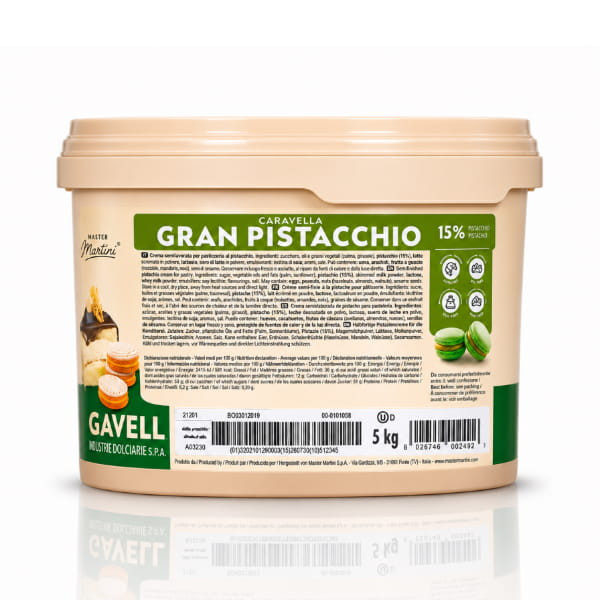
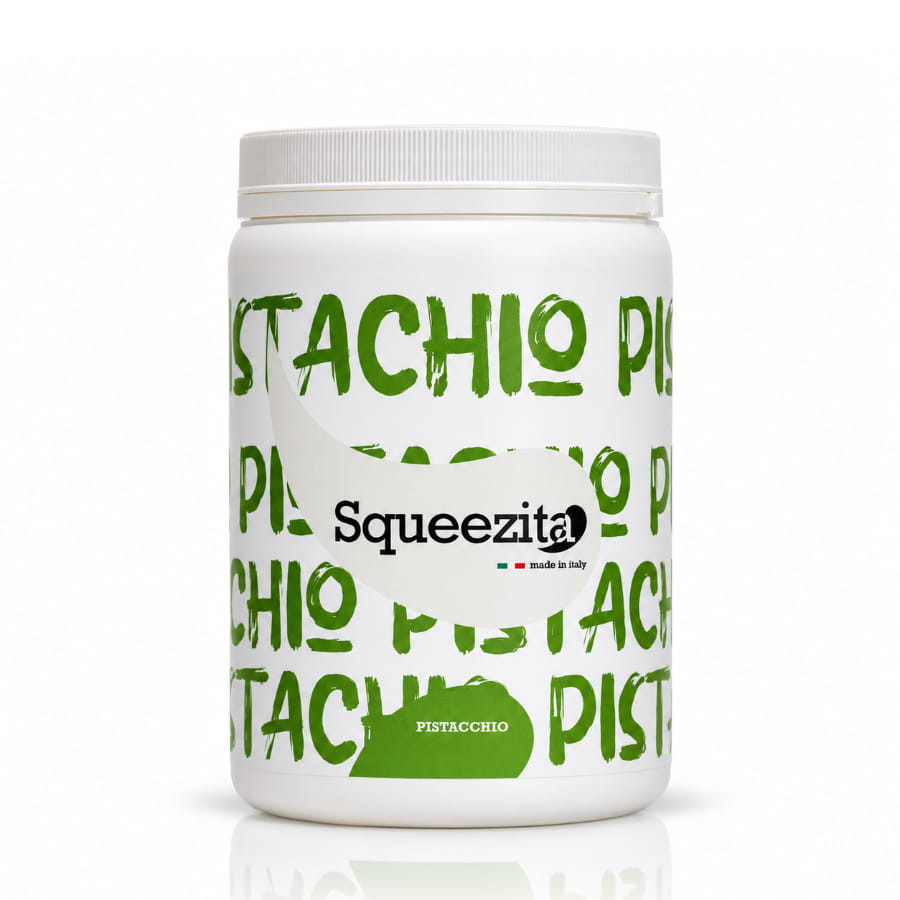
- Pistachio pastes, 100% pure or composite, from Sicilian, Mediterranean or other pistachios: 35 products.
- Nut pastes (almond, walnut, peanut, pure pistachio and more): 38 products.
- Powdered flavourings (yogurt, cheesecake, instant coffee, cheese…), more concentrated: 37 products.
- Sicilian specialities (cassata, cannolo, almond, citrus): 43 products.
- DOP and IGP products, such as Piemonte IGP hazelnut: 9 products.
Then there are complete ready-to-churn pastes, which are not added to a base: they already contain everything and are dissolved in water or milk.
How much gelato paste per kg of mix?
We read the dosage stated on the technical sheets of all the pastes in our catalogue (717 products, analysis of 16/11/2026). These are the manufacturers' recommended doses, in grams per kg of mix:
| Type | Products analysed | Median dose | Most common range |
|---|
| Classic pastes |
232 |
70 g/kg |
50–100 g/kg |
| Fruit pastes |
139 |
80 g/kg |
65–100 g/kg |
| Hazelnut pastes |
27 |
90 g/kg |
80–90 g/kg (up to 150) |
| Pistachio pastes |
30 |
90 g/kg |
80–100 g/kg (up to 150) |
| Nut pastes |
33 |
90 g/kg |
80–90 g/kg |
| Powdered flavourings |
35 |
40 g/kg |
30–50 g/kg |
| Sicilian specialities |
19 |
100 g/kg |
80–100 g/kg |
| DOP and IGP products |
6 |
100 g/kg |
100 g/kg |
"Most common range": half of the products have a dose between these two values. Only products with a readable dosage on the sheet are counted.
The doses are a starting point: for a more intense flavour go towards the higher value, but beyond a certain amount fatty pastes (hazelnut, pistachio) change the texture of the gelato, which becomes harder, so it is worth rebalancing the base. Always follow the dosage on the individual product sheet.
Examples of pastes and dosages
How do you use a gelato paste?
- Prepare the base mix (white, custard or neutral for fruit), pasteurised and aged as stated on the base sheet.
- Weigh the paste according to the dosage: for 5 kg of mix and a dose of 90 g/kg you need 450 g of paste.
- Mix well with a stick blender or a whisk, because fatty pastes tend to settle at the bottom.
- Churn as usual. Add ripple sauces afterwards, in the tub.
The same applies to fruit pastes, with a fruit base or a sorbet; some, like PreGel Fortefrutto, are designed to boost the flavour of fresh fruit at a lower dose.
How do you choose the right paste?
- Pure or composite. For hazelnut and pistachio, a "pure" or "100%" paste contains only roasted, ground nuts; composite pastes add sugars, vegetable oils, flavourings or colourings. Always read the ingredient list on the sheet: Pernigotti Pistachio Maestro paste, for example, declares 98.6% pistachios, plus salt and colouring.
- Roast. Dark hazelnut pastes are more roasted and bitter, light ones more delicate.
- Origin. For premium flavours choose a DOP or IGP paste, such as Piemonte IGP hazelnut, and say so on the flavour label.
- Customers with special needs. Check allergens, lactose or added sugars and Halal and Kosher certifications on the sheet.
- Pack size. Pastes range from 0.5 to 6 kg: for slow-selling flavours the small pack is better, as it is used up before you open a new one.
FAQ
How much hazelnut paste per 1 kg of gelato?
According to the technical sheets of the hazelnut pastes in the Gelq.it catalogue, the median dose is 90 g per kg of mix, with a typical range between 70 and 100 g. For a very intense flavour some manufacturers go up to 120–150 g/kg.
How much pistachio paste per 1 kg of gelato?
For pistachio the median dose is also 90 g/kg: most pastes are used between 80 and 100 g/kg, the most intense up to 120 g/kg.
What is the difference between a paste and a ripple sauce?
The paste is mixed into the base before churning and flavours the whole gelato. The ripple sauce is layered into the gelato after churning, to create swirls and contrasts.
Can gelato pastes be used in pastry?
Many can, to flavour creams, mousses and semifreddi; there are also pastes made specifically for pastry. Check the use stated on the product sheet.
What is a complete ready-to-churn paste?
It is a mix that already contains everything: you dissolve it in water (or milk) at the manufacturer's dose and churn it, without adding a base.
Read also














































 What to sell in a gelato shop in winter: 8 ideas to stay busy all yearLeggi tutto ...
 Toppings for gelato, bars and pastry: types, flavours, lines and how to use themLeggi tutto ...
 How to fill and glaze artisan panettone: 16 pairings for panettone and colombaLeggi tutto ...
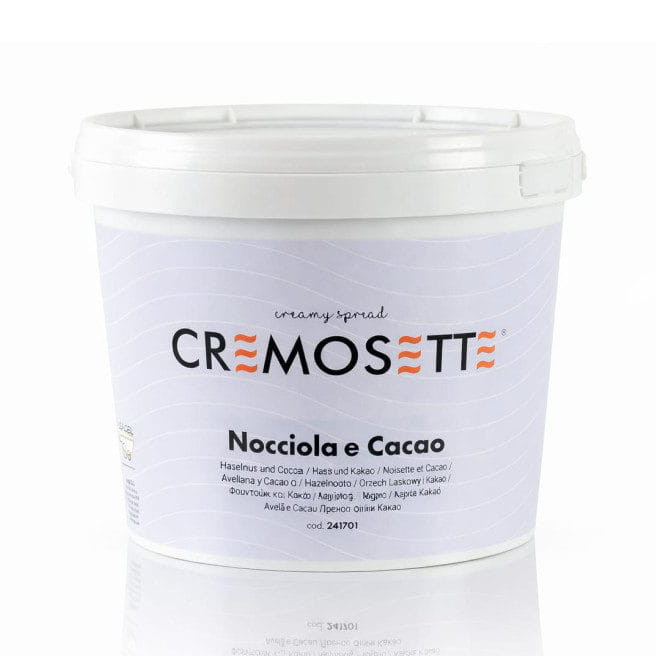
 Filling creams for croissants, tarts and cakes, our selectionFilling creams for croissants, brioche, tarts and cakes compared: Cremosette, Farcitella, Squeezita, Fruit Crmy,...Read more ...
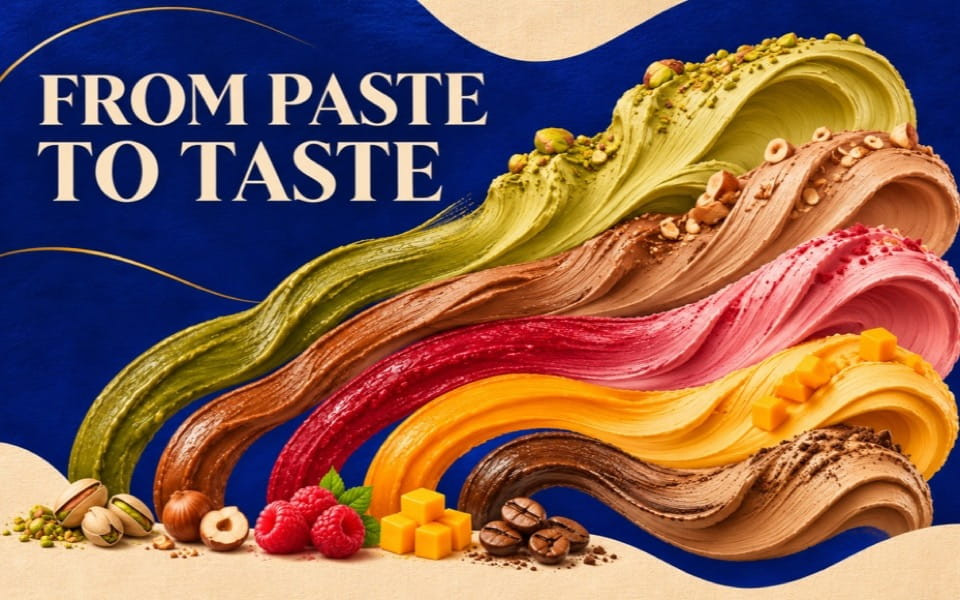 Gelato pastes: types, dosages and how to choose themHow much paste per kg of mix? The 8 types of gelato pastes, average dosages from over 700 technical sheets and how to...Read more ...
 Takeaway gelato containers: materials, sizes and how to choose themHow to choose takeaway gelato containers: materials (EPS, thermoformed polystyrene, paperboard), sizes and weights,...Read more ...